
![Immobilienverkauf in Deutschland: Kosten, Steuern und Ablauf [Checkliste 2026]](https://zjgkxfdlvi.blogbowl.app/rails/active_storage/blobs/redirect/eyJfcmFpbHMiOnsiZGF0YSI6MTY4MiwicHVyIjoiYmxvYl9pZCJ9fQ==--bea7f23e2f1ce2123eeb745498a20c0ab7e8cc7e/Immobilienverkauf%20in%20Deutschland-%20Kosten,%20Steuern%20und%20Ablauf%20%5BCheckliste%202026%5D-cover.webp)

Einordnung 2026: Immobilienverkauf in Deutschland – Markt, Pflichten, Chancen
2026 ist der Immobilienverkauf in Deutschland von drei Kräften geprägt: makroökonomische Stabilisierung nach dem Zinsanstieg, schärfere Energie- und ESG-Anforderungen sowie klarere rechtliche Leitplanken im GEG, BGB und Maklerrecht. Für Verkäufer heißt das: Wer Preis, Unterlagen und Prozess professionell aufsetzt, maximiert die Nachfrage und damit den Nettoerlös – trotz anspruchsvollerer Käuferprüfung und Energie-Transparenz.
"Die durchschnittliche Vermarktungsdauer in deutschen Metropolen ist 2025 gegenüber 2024 um 5 Tage gesunken." - Source
Warum Vorbereitung den Nettoerlös bestimmt
Marktumfeld und Zinsen:
Ein Zinsplateau stabilisiert die Kalkulation, doch Käufer kalkulieren strikt – Finanzierungsbestätigungen und belastbare Unterlagen werden zum Eintrittsticket.
Regionale Unterschiede bleiben groß; Mikrolage und Objektqualität entscheiden über Nachfragebreite und Preisband.
Energieeffizienz und ESG:
Energieausweis, Heizsystem, Dämmstandard und Potenzial für Sanierungen fließen direkt in Preisverhandlungen ein; CapEx-Pläne und Angebote/Belege reduzieren Risikoabschläge.
ESG-Kriterien gewinnen an Relevanz, besonders bei Kapitalanlegern und institutionell geprägten Käuferprofilen.
Rechtliche Pflichten (GEG, BGB, Maklerrecht):
GEG: Energiekennwerte müssen ins Exposé; Ausweis spätestens zur Besichtigung – Versäumnisse kosten Reichweite und können Bußgelder auslösen.
BGB/Notariat: Auflassungsvormerkung, klare Fälligkeitsvoraussetzungen und Lastenfreistellung sichern die Abwicklung.
Maklerrecht: Geteilte Provision bei Wohnimmobilien (seit 12/2020) strukturiert die Kostenverteilung und Erwartungen beider Seiten.
Besonderheit 2026: ESG- und Effizienzthemen rücken weiter in die Preisverhandlung
Käufer verlangen nachvollziehbare Energie- und Instandhaltungs-Storys (z. B. „Energie-Delta“ zwischen Ist-Zustand und Effizienzklasse-Ziel).
Förderfähigkeit, Sanierungsfahrplan und dokumentierte Maßnahmen (Rechnungen, Garantien) werden zu Preistreibern statt Beiwerk.
Suchintention trifft Business-Nutzen: Mit strukturierter Vorbereitung senken Sie Reibungsverluste, vermeiden Preisabschläge und halten die immobilienbezogenen Kosten (z. B. doppelte Bewirtschaftung, Verzögerungen, Nachverhandlungen) gering. Genau hier setzt unsere immobilienverkauf Beratung und Betreuung beim Immobilienverkauf an.
Für wen ist dieser Guide gedacht
Eigennutzer und Familien:
Fokus auf Wohnqualität, Planbarkeit, sichere Finanzierung und reibungslose Übergabe – inkl. sauberer Unterlagenlage und transparenter Energiekennzahlen.
Kapitalanleger:
Ertragswert, Mietentwicklung, Instandhaltungsrücklage und ESG-Risiken im Fokus; Due-Diligence-Readiness schafft Vertrauen und verkürzt die Vermarktungsdauer.
Erstverkäufer:
Schritt-für-Schritt-Unterstützung zu Ablauf, Kosten beim Immobilienverkauf, steuerlichen Fristen und Preisstrategie – ohne juristische Fallstricke.
Luxus- und Investmentsegmente:
Pflegeimmobilien, Micro-Apartments, System-Immobilien: Spezifische Vermarktung, CAPEX/ESG-Transparenz, belastbare Betreiber-/Mietverträge, Standortbenchmarks und Off-Market-Ansprache.
Besonderheiten in der Due Diligence: Belegkette, Betreiberbonität, Indexierung, Leerstandrisiken, Instandhaltungscycle. Präzise Dokumentation und Zielgruppen-Targeting sind hier entscheidend.
localis Vorteil: Exklusiver Off-Market-Zugang, internationale Zielgruppenansprache (Düsseldorf, Paris, CH, Zypern, Dubai) und eine kuratierte Käuferdatenbank erhöhen Reichweite und Preisqualität – besonders relevant für hochwertige Wohn- und Spezialimmobilien.
Das 48h-Startpaket (sofort umsetzbar)
Marktwert-Schnellcheck + Preisband definieren
Realistische Bandbreite (Minimum/Realistisch/Stretch) auf Basis von Vergleichswert/Ertragswert; Best-Case nur mit klaren kaufmännischen Belegen spielen.
Früh entscheiden: Fester Angebotspreis vs. Preiskorridor vs. Bieterverfahren – abgestimmt auf Nachfrage, Objektcharakter und Timing.
Unterlagenliste anlegen
Energieausweis-Status prüfen (GEG-Pflicht, Restlaufzeit, benötigte Angaben fürs Exposé).
Grundbuchauszug (aktuell ≤ 3 Monate), Flächen-/Grundrissunterlagen, Modernisierungsnachweise, WEG-Protokolle (3 Jahre), Wirtschaftsplan, Rücklagenstand.
Bei vermieteten Einheiten: Mietvertrag, Kaution, Nebenkostenabrechnungen, Index-/Staffelklauseln.
Käuferqualifizierung vorbereiten und Besichtigungen planen
Finanzierungsbestätigung/Proof of Funds als Standard vor Terminvergabe.
Zeitfenster bündeln (z. B. Di 18–20 Uhr, Sa 10–13 Uhr), klare Infopakete vorab (Exposé, Energiekennwerte, Objekt-FAQ).
Gesprächsleitfaden und Entscheidungslogik vorbereiten (Kaufpreis, Übergabetermin, Bedingungen). So vermeiden Sie späte Rückzieher und reduzieren immobilien Kosten durch Verzögerungen.
Mit dieser Struktur sind Sie in 48 Stunden „deal-ready“ – sichtbar im Markt, rechtssicher in den Pflichten und verhandlungssicher bei ESG- und Effizienzthemen. Genau hier unterstützt localis Sie mit persönlicher, kompetenter Begleitung für den Immobilienverkauf Deutschland und dem Ziel, Ihren Nettoerlös zu maximieren.
Ablauf & Zeitplan: In 8 Schritten zum rechtssicheren Verkauf
"Kaufverträge über Grundstücke bedürfen der notariellen Beurkundung." - Source
Der Prozess im Überblick (0–5+ Monate)
Vorbereitung & Strategie (Privatverkauf vs. Makler, Datenraum, Energieausweis)
Verkaufsweg festlegen, Rollen klären, Maklervertrag prüfen.
Digitalen Datenraum anlegen: Grundrisse, Flächen, Modernisierungen, WEG-/Mietunterlagen.
Energieausweis beschaffen und Pflichtangaben fürs Exposé aufbereiten (GEG).
Bewertung & Angebotspreis (Vergleichs-/Ertrags-/Sachwert)
Vergleichswerte der Mikrolage, Ertragswert bei vermieteten Objekten, Sachwert bei Sonderfällen.
Preisband definieren (Minimum/Realistisch/Stretch) und Strategie wählen (Fixpreis, Korridor, Bieterverfahren).
Exposé & Sichtbarkeit (Portale, Off-Market, Social)
Profi-Fotos, Grundrisse, Energiekennwerte, Storyline.
Portale + Off-Market-Netzwerk + Social Ads (Zielgruppen-Targeting).
Besichtigungen & Qualifizierung (Proof of Funds, Bündel-Termine)
Finanzierungsbestätigung/Proof of Funds vor Termin.
Cluster-Besichtigungen, strukturierter Leitfaden, Objekt-FAQ.
Angebote & Verhandlung (Preis, Bedingungen, Fristen)
Bonität, Fristen, Übergabetermine, Vorbehalte prüfen.
Taktisch verhandeln: Nettoerlös, Risiken, Timing.
Kaufvertrag & Notar (Entwurf, Auflassungsvormerkung, Fälligkeitsmitteilung)
Entwurf prüfen, GEG-/Beschaffenheitsangaben, Inventarliste.
Auflassungsvormerkung und Fälligkeitsvoraussetzungen sauber definieren.
Zahlung & Lastenfreistellung (Grundschuldlöschung, GrESt-Seite Käufer)
Zahlung nach Fälligkeitsmitteilung; Notar bzw. Treuhand beachten.
Löschung bestehender Grundschulden veranlassen; Grunderwerbsteuer zahlt Käufer.
Übergabe & After-Sale (Protokoll, Zählerstände, Dokumentation)
Übergabeprotokoll mit Zählerständen, Schlüssel, Anlagenunterlagen.
Dokumentation archivieren; ggf. steuerliche Themen (Spekulationssteuer) prüfen.
Meilensteine & typische Dauer
Vorbereitung & Strategie: 1–3 Wochen
Reaktionsfenster: In den ersten 14–21 Tagen nach Marktstart Resonanz messen; ggf. Preis-/Strategieanpassung.
Bewertung & Angebotspreis: 3–7 Tage (bei Profi-Bewertung 1–2 Wochen)
Exposé & Sichtbarkeit: 3–10 Tage bis Livegang
Besichtigungen & Qualifizierung: 2–6 Wochen (je nach Lage und Segment)
Angebote & Verhandlung: 1–3 Wochen
Kaufvertrag & Notar: Entwurf 1–2 Wochen vor Termin, Beurkundung an Tag X
Zahlung & Lastenfreistellung: 2–6 Wochen bis Fälligkeit/Zahlungsfluss
Übergabe & After-Sale: innerhalb 1–2 Wochen nach Zahlung; Grundbuchumschreibung später
Kosten beim Immobilienverkauf: vollständige Übersicht & Beispielrechnung
"Typische Notar- & Grundbuchkosten belaufen sich auf ca. 1,5–2% des Kaufpreises (Käuferseite)." - Source
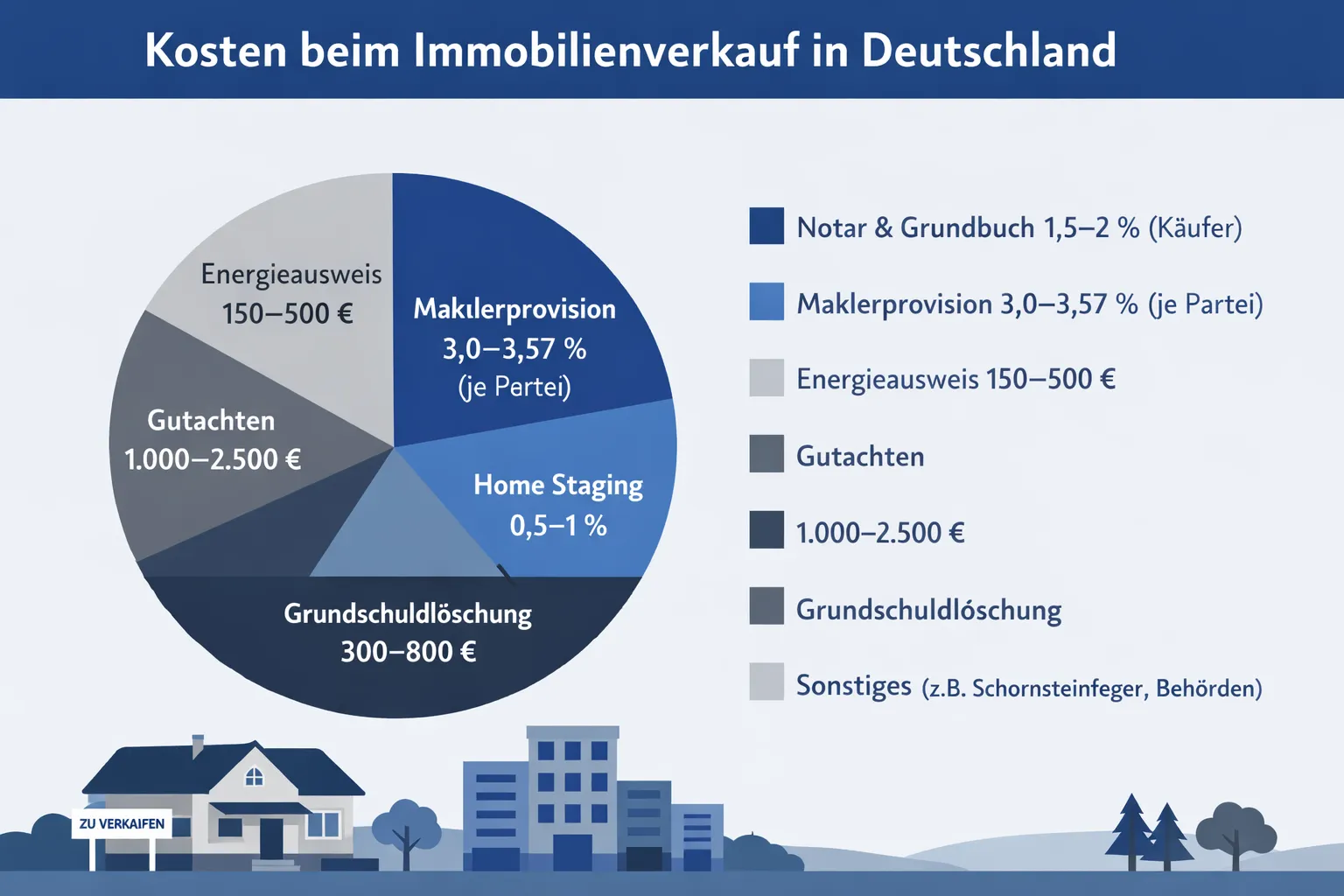
Fixe & variable Kosten
Notar- und Grundbuch (GNotKG, i. d. R. Käuferseite; Verkäufer: Löschung Grundschuld)
Energieausweis (Bedarf/Verbrauch), ggf. Gutachten, Unterlagenbeschaffung
Präsentation: Foto/Video, 3D-Grundrisse, Home Staging
Maklerprovision (seit 12/2020 Kostenverteilung bei ETW/EFH)
Wer zahlt was? (Praxis)
Übliche Verteilung und regionale Unterschiede, vertragliche Absprachen
In vielen Bundesländern: Käufer zahlt Notar/Grundbuch, Verkäufer die Löschung eigener Grundschulden
Provisionsteilung bei ETW/EFH gesetzlich geregelt; Höhe regional unterschiedlich (Vertrag beachten)
Energieausweis, Präsentation und optionale Gutachten meist Verkäuferseite (Verhandlungsfrage möglich)
Beispielkalkulation (500.000 € Kaufpreis)
Kostenposition | Wer trägt (üblich) | Richtwert | Hinweise |
|---|---|---|---|
Notar/Grundbuch | Käufer | 1,5–2,0% (7.500–10.000 €) | GNotKG; ggf. leicht abweichend je Vorgang |
Grundschuldlöschung | Verkäufer | 300–800 € | Abhängig von Höhe/Anzahl der Eintragungen |
Energieausweis | Verkäufer | 150–500 € | Verbrauchsausweis günstiger als Bedarfsausweis |
Wertgutachten (optional) | Verkäufer | 1.000–2.500 € | Markt-/Verkehrswertgutachten, Objektkomplexität |
Home Staging (optional) | Verkäufer | 0,5–1,0% (2.500–5.000 €) | Größe, Umfang und Mietmöblierung |
Foto/Video/3D-Grundrisse | Verkäufer | 400–1.500 € | Paketabhängig; Profi-Content erhöht Reichweite |
Maklerprovision | Käufer/Verkäufer | je 3,0–3,57% | ETW/EFH: hälftige Verteilung seit 12/2020 üblich |
Sonstiges (Behörden/Schornsteinfeger) | Verkäufer | 50–300 € | Auskünfte, Bescheinigungen, Kopien |
Hinweise:
Regionale Praxis kann abweichen; vertragliche Absprachen sind möglich.
Für Kapitalanleger zählen Nebenkosten und CapEx zur Nettoerlös-Betrachtung; saubere Beleglage stärkt Verhandlungsposition.
Eine professionelle Präsentation amortisiert sich oft über höhere Nachfrage und kürzere Vermarktungsdauer.
Steuern 2026: Spekulationssteuer, Sonderfälle, Fristen
"Private Veräußerungsgeschäfte bei Grundstücken sind steuerpflichtig, wenn der Zeitraum zwischen Anschaffung und Veräußerung nicht mehr als zehn Jahre beträgt." - Source
Kernregeln
10-Jahres-Frist (§ 23 EStG); Ausnahme Eigennutzung (im Verkaufsjahr und den beiden Vorjahren)
Vermietete Objekte: Werbungskosten, AfA-Historie, Dokumentationspflichten
Was das für Verkäufer bedeutet:
Spekulationssteuer fällt an, wenn zwischen Kauf und Verkauf < 10 Jahre liegen – außer bei ausschließlicher Eigennutzung im Verkaufsjahr und den zwei Vorjahren.
Bei Vermietung: vollständige Unterlagen zu Werbungskosten (z. B. Makler, Notar, Instandhaltung) und AfA-Historie bereithalten; sie beeinflussen die steuerliche Betrachtung und mindern den Veräußerungsgewinn, soweit abzugsfähig.
Sonderfälle & Risiken
Gewerblicher Grundstückshandel
Indizien wie die Drei-Objekt-Grenze können zu gewerblichen Einkünften und USt-/Gewerbesteuer führen. Frühzeitig Steuerberater einbinden.
Verkauf mit Wohnrecht/Nießbrauch
Wohnrecht/Nießbrauch reduziert den Verkehrswert; Auswirkungen auf Gewinnermittlung und ggf. Schenkungsteuer beachten.
Erbschaft/Schenkung
Freibeträge (z. B. in direkter Linie) nutzen; Fristenfortführung: Anschaffungsdatum des Erblassers/Schenkers kann maßgeblich sein.
Dokumentation & Belegführung
Welche Kosten/Belege den Veräußerungsgewinn mindern können:
Erwerbsnebenkosten (Notar/Grundbuch), Maklerkosten, nachträgliche Herstellungskosten/Modernisierungen, Energieausweis/Gutachten, Inserats-/Vermarktungskosten.
Belege vollständig sammeln: Rechnungen, Verträge, Zahlungsnachweise, AfA-Nachweise, Förderbescheide.
Steuer-Checkmatrix
Nutzung/Status | Haltedauer | Steuerfolgen | Hinweise/Dokumente |
|---|---|---|---|
Eigennutzung (<10 J.) | < 10 Jahre | Prüfung Ausnahme Eigennutzung; oft steuerfrei | Melde- und Nutzungsnachweise (Meldebescheinigung, Selbstnutzung) |
Vermietung (<10 J.) | < 10 Jahre | Spekulationssteuer auf Veräußerungsgewinn | Anschaffungs-/Herstellungskosten, Werbungskosten, AfA-Historie, Belege |
Privat >10 J. | > 10 Jahre | Regelmäßig steuerfrei | Nachweis Anschaffungs-/Veräußerungsdaten; Belege archivieren |
Verkauf mit Wohnrecht/Nießbrauch | variabel | Wertminderung beeinflusst Gewinn; ggf. schenkungs-/erbschaftsteuerliche Aspekte | Vertragliche Vereinbarungen, Bewertung des Rechts, Notar-/Bewertungsunterlagen |
Erbschaft/Schenkung | übernommen | Freibeträge, Fristenfortführung (Anschaffungsdatum Erblasser/Schenker) | Erb-/Schenkungsverträge, Nachweise, ggf. Feststellungsbescheide |
Hinweis: Diese Informationen ersetzen keine Steuerberatung. Für komplexe Fälle (Mehrfachtransaktionen, Umwidmung, Gesellschaftsstrukturen) frühzeitig steuerlichen Rat einholen.
Preisfindung & Bewertung: Methoden, Datenquellen und Preisstrategie
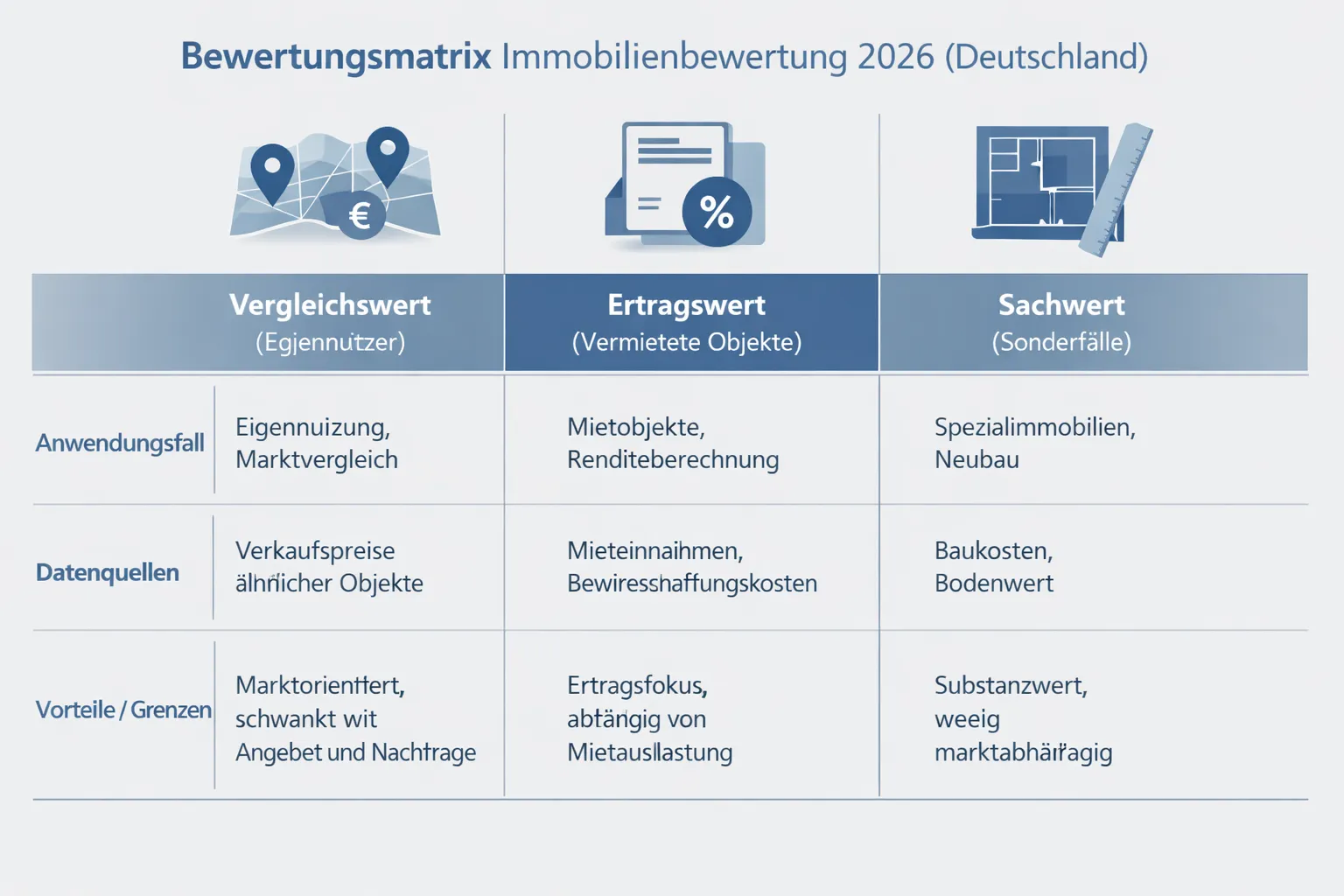
Bewertungsmethoden
Vergleichswert (für Eigennutzer-Objekte), Ertragswert (vermietete Objekte), Sachwert (Sonderfälle)
Datenquellen: Gutachterausschüsse, Marktberichte, hedonische Modelle, Micro-/Makro-Lage
So wählen Sie das passende Verfahren:
Vergleichswertverfahren
Ideal für Standard-Wohnungen/Häuser in aktiven Märkten mit ausreichend Kauffällen.
Stützt sich auf reale Kaufpreise ähnlicher Objekte (Mikrolage, Baujahr, Zustand, Energieklasse).
Ertragswertverfahren
Für vermietete Objekte: Fokus auf nachhaltig erzielbare Nettokaltmiete, Leerstands- und Instandhaltungsrisiken, Liegenschaftszins.
ESG-/CapEx-Planung und Mietrecht (Indexierung/Staffel) beeinflussen die Kapitalisierung.
Sachwertverfahren
Für Sonderfälle wie individuelle Architekturen, geringe Vergleichbarkeit, spezielle Grundstückskonstellationen.
Ermittelt Baukosten (Zeitwert) + Bodenwert; Marktanpassungsfaktor berücksichtigt Nachfrage.
Datenquellen und Qualitätssicherung:
Gutachterausschüsse und Bodenrichtwerte, Kaufpreissammlungen
Marktberichte (lokale GA-Berichte, Verbände, Banken)
Hedonische Bewertungsmodelle als Richtwert – stets Plausibilisierung mit „echten“ Transaktionen
Mikro-/Makrolage: ÖPNV, Schulen, Lärm, ESG-Risiken, Entwicklungsperspektive
Preisstrategie
Fixpreis
Sinnvoll bei klarer Vergleichbarkeit und hoher Sicherheit zur Zahlungsbereitschaft.
Vorteil: Planbarkeit; Risiko: „Ladenhüter“, wenn zu hoch.
Preiskorridor
Eignet sich bei heterogener Nachfrage oder mehreren Käuferprofilen (Eigennutzer vs. Kapitalanleger).
Vorteil: Taktischer Spielraum; Risiko: zu breite Spanne verunsichert.
Bieterverfahren
Bei knapper Lage, hoher Attraktivität oder Off-Market-Push.
Vorteil: Wettbewerbseffekt; Voraussetzung: straffe Prozessführung und Käuferqualifizierung.
Rolle von ESG/Energieeffizienz:
Energieklassen beeinflussen Zahlungsbereitschaft direkt; dokumentierte Maßnahmen und belastbare Angebote (Heizung, Dämmung) reduzieren Risikoabschläge.
Förderfähigkeit, Sanierungsfahrplan und Betriebskostenprojektionen funktionieren als starke Preisargumente.
Praxisleitfaden
Bandbreite definieren: Minimum/Realistisch/Stretch basierend auf Vergleichs- und Ertragsindikatoren.
Preistests in den ersten 14–21 Tagen:
Resonanz messen (Anfragen, Besichtigungen, qualifizierte Angebote).
Datenbasiert anpassen: Sichtbarkeit/Content erst optimieren, dann feinjustiert am Preis drehen.
Anpassungslogik:
Keine qualifizierten Termine in 14 Tagen: Exposé/Assets optimieren; ggf. −2 bis −3 %.
Hohe Resonanz, mehrere Proof-of-Funds: Korridor erhöhen/auf Bieterverfahren schalten.
ESG-Unsicherheit: Energie-/Sanierungsunterlagen nachschieben, CapEx transparent machen, statt pauschal zu reduzieren.
Mit strukturierter Bewertung, belastbaren Daten und einer klaren Preisstrategie maximieren Sie Reichweite, Verhandlungsmacht und Nettoerlös.
Unterlagen & Checklisten: Was Käufer, Bank und Notar verlangen
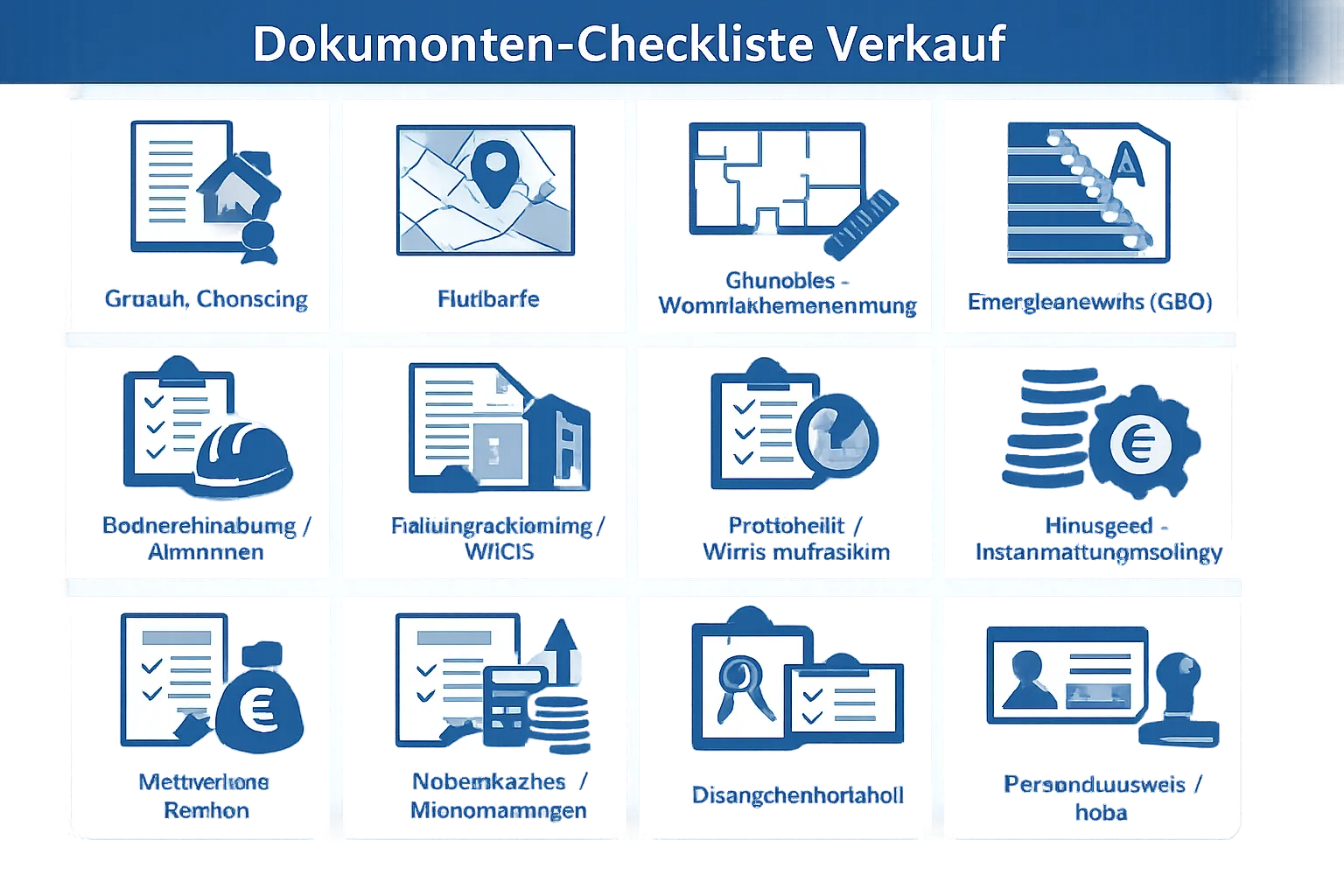
Basisunterlagen (alle Objekte)
Aktueller Grundbuchauszug (≤ 3 Monate)
Flurkarte/Lageplan
Grundrisse und Wohnflächenberechnung
Energieausweis mit Pflichtangaben gemäß GEG
Baubeschreibung, Abnahmen, Wartungs-/Revisionsunterlagen
Modernisierungs-/Sanierungsnachweise, Rechnungen, Garantien
Eigentumswohnungen (WEG)
Teilungserklärung & Gemeinschaftsordnung, Aufteilungs-/Teilpläne
Protokolle der letzten 3 Jahre (Eigentümerversammlungen)
Wirtschaftsplan, Hausgeldabrechnungen, Instandhaltungsrücklage
Verwalterbestätigungen, Sonderumlagen, Beschlusssammlung
Vermietete Einheiten
Mietvertrag und Nachträge, Übergabeprotokoll (Einzug)
Nebenkostenabrechnungen, Mieterhöhungsnachweise/Index- oder Staffelklauseln
Kautionsnachweis (Art der Anlage), Übergabe von Nutzen und Lasten im Kaufvertrag
Zahlungsnachweise/Bonität (pünktliche Mietzahlungen), eventuelle Räumungsvereinbarungen
Digitaler Datenraum & Datenschutz
Struktur:
00_Admin (Exposé, Objekt-FAQ)
10_Recht (Grundbuch, GEG/Energieausweis, Verträge)
20_Technik (Pläne, Abnahmen, Wartung)
30_WEG (Protokolle, Wirtschaft, Rücklage)
40_Vermietung (Mietvertrag, Kaution, NK)
Namenskonventionen: JJMMTT_Dokumenttyp_Objektkürzel_Version (z. B. 260111_Grundbuch_ETW12_v1)
Zugriff: Read-only-Links für Interessenten; Schreibrechte nur intern
Versionierung: Änderungsprotokoll, Archiv-Ordner für alte Stände
Datenschutz: Personenbezogene Daten schwärzen (IBAN, Ausweise), Downloadrechte steuern, DSGVO-Hinweise im Datenraum platzieren
Mit einer sauberen Unterlagenarchitektur beschleunigen Sie die Bankprüfung, vermeiden Rückfragen beim Notar und stärken Ihre Verhandlungsposition.
Vermarktung, Sichtbarkeit & Käuferqualifizierung

Reichweite
Portale (Premium-Listing): Priorisieren Sie Top-Portale, optimieren Sie Titelbilder und erste 150 Zeichen für Klickrate.
Off-Market/VIP-Buyer: Diskrete Vorabansprache an geprüfte Käufer steigert Abschlusswahrscheinlichkeit ohne Preisdruck.
Social (zielgruppenspezifisch): Instagram/LinkedIn für urbane Premium-Zielgruppen, Facebook für Familien, Geotargeting nutzen.
Exposé-Standards
Hochwertige Fotos, 3D-Grundrisse, Drohne (wo zulässig), Virtual Tours; GEG-Pflichtangaben in Anzeige
Storytelling + harte Fakten: Lage, Mikrolage, Energiekennwerte, CapEx/ESG, Grundrisse, Ausstattung
Einheitliche CI der Bilder, Tageslicht-Slots, professionelle Nachbearbeitung
Besichtigungen & Qualifizierung
Proof of Funds/Finanzierungsbestätigung vor Terminvergabe
Termincluster (z. B. Di 18–20 Uhr, Sa 10–13 Uhr) für Tempo und Vergleichbarkeit
Besucher-Management: Check-in-Liste, Objekt-FAQ, Kurzexposé vor Ort
Sicherheitsaspekte: Begleitete Führungen, Identitätsprüfung, Wertsachen sichern
Recht & Service
Widerrufsbelehrungen (Fernabsatz) korrekt erteilen; Fristen dokumentieren
DSGVO-konforme Interessentenverwaltung: Datensparsamkeit, Einwilligungen, Löschfristen
After-Sales-Service: Zusätzliche Dokumente zeitnah bereitstellen, klare Kommunikation zu Fristen/Notartermin
Mit dieser Vermarktungsarchitektur erhöhen Sie Sichtbarkeit, filtern effizient und führen qualifizierte Käufer zügig zum rechtssicheren Abschluss.
Verhandlung, Kaufvertrag & Notartermin: Fehler vermeiden, Sicherheit erhöhen
Ein starker Nettoerlös entsteht in der Verhandlung – gesichert wird er im Vertrag. Mit klaren Kriterien, sauberem Vertragswerk und präziser Abwicklung minimieren Sie Risiken, verkürzen den Prozess und vermeiden teure Nachverhandlungen.
Angebote professionell vergleichen
Bewerten Sie jedes Angebot nicht nur am Preis, sondern als Gesamtpaket aus Sicherheit, Tempo und Bedingungen:
Preis & Zahlungsplan
Gebotshöhe vs. Marktbandbreite; Zahlungsfälligkeit (Termine, Teilzahlungen, Anderkonto ja/nein).
Finanzierungsstatus
Verbindliche Finanzierungsbestätigung/Proof of Funds, Eigenkapitalanteil, Bank und Konditionen, Ablauf der Kreditgenehmigung.
Bedingungen & Vorbehalte
Finanzierungsvorbehalt, Gutachter-/Bausachverständigenvorbehalt, aufschiebende Bedingungen (z. B. Genehmigungen).
Fristen & Übergabetermine
Geplanter Notartermin, Fälligkeit, Nutzen-/Lastenwechsel, Räumungstermine (bei Eigennutzung).
Risikoindikatoren
„Lowball“-Taktiken, ungewöhnlich viele Vorbehalte, fehlende Finanzierungsdokumente, unrealistische Zeitvorgaben.
Praxis-Tipp:
Shortlist anhand eines Scorings (Preis 40 %, Finanzierung 30 %, Bedingungen 20 %, Timing 10 %).
Gegenangebote strukturiert stellen: Priorisieren Sie zuerst Finanzierungsnachweis/Fälligkeit, dann Preis.
Vertragswerk & Notar
Der Kaufvertrag ist das Rückgrat eines rechtssicheren Verkaufs. Planen Sie ausreichend Prüfzeit ein und achten Sie auf folgende Bausteine:
Entwurf & Prüffrist
Notarentwurf i. d. R. 1–2 Wochen vor Beurkundung prüfen lassen; Abgleich mit Exposé/Unterlagen, GEG-Pflichtangaben.
Auflassungsvormerkung
Sichert den Anspruch des Käufers bis zur Eigentumsumschreibung; Voraussetzung für die Fälligkeitsmitteilung.
Fälligkeitsmitteilung
Ergeht nach Erfüllung der vertraglich festgelegten Voraussetzungen (z. B. Vormerkung, Negativ-Bescheinigungen, Verwalterzustimmung WEG, ggf. Vorkaufsrechtsverzichte).
Lastenfreistellung
Löschungsbewilligungen der finanzierenden Banken; Treuhandauflagen präzise formulieren, damit nach Zahlung alle Grundpfandrechte gelöscht werden.
Inventarlisten
Bewegliche Gegenstände (z. B. Einbauküche, Leuchten) mit Einzelpreisen auflisten; klare Vereinbarung zur Übergabe und Abgrenzung zum Kaufgegenstand.
Besondere Klauseln
„Gekauft wie gesehen“ (Sachmängelhaftung) mit dokumentierten Ausnahmen; Protokollierte Beschaffenheit (z. B. Gerätealter, bekannte Mängel).
Vermietete Objekte: Übergang von Mieten/Kaution, Abrechnungsstichtag, Mitteilung an Mieter.
Zahlung & Sicherheiten
Direkte Kaufpreiszahlung vs. Notaranderkonto (nur, wenn berechtigte Gründe vorliegen).
Grunderwerbsteuer auf Käuferseite; Klarheit zu Fristen und Zahlungswegen herstellen.
Typische Fehler vermeiden:
Unklare Fälligkeitsvoraussetzungen und fehlende Fristen.
Nicht geregelte Inventar-/Sonderausstattungen.
Lücken bei Lastenfreistellung/Löschungsbewilligungen.
Fehlende oder falsche GEG-/Energieangaben im Vertrag.
Übergabe & After-Sale
Eine strukturierte Übergabe schützt beide Seiten und schließt den Verkauf professionell ab:
Übergabeprotokoll
Zählerstände (Strom, Gas, Wasser, Wärme), Schlüsselanzahl, Zustand der Immobilie, mit übergebene Unterlagen (Pläne, Anleitungen, Wartungshefte).
Foto-/Video-Dokumentation des Zustands am Übergabetag.
Nutzen-/Lastenwechsel
Stichtag definieren (regelmäßig Tag nach Kaufpreiszahlung); klare Abrechnung von Hausgeld, Betriebs-/Nebenkosten, Versicherungen.
Dokumenten-Archiv
Kaufvertrag, Notarunterlagen, Fälligkeitsmitteilung, Zahlungsbelege, Löschungsbewilligungen, Energieausweis, Sanierungs-/Wartungsrechnungen, WEG-Dokumente.
Aufbewahrungsempfehlung: mindestens 10 Jahre.
Kommunikation & Meldungen
Information an Hausverwaltung/Versicherer/Versorger; Ummeldungen und SEPA-Mandate aktualisieren.
Bei vermieteten Einheiten: schriftliche Anzeige des Eigentümerwechsels an Mieter inkl. neuer Kontoverbindung; Übergabe der Kaution mit Nachweis.
Fristenkalender
Zahlungseingang überwachen, Übergabetermin fixieren, etwaige Restleistungen (z. B. Reparaturen) terminieren, Grundbuchumschreibung nachverfolgen.
Steuerliche Prüfung (Spekulationssteuer, Werbungskosten) und fristgerechte Deklaration vorbereiten.
Mit dieser Struktur reduzieren Sie Reibungsverluste, sichern den Nettoerlös und führen Käufer kontrolliert durch den Abschluss – von der ersten Zusage bis zur letzten Schlüsselübergabe.
Spezialfälle & Risiken: Vermietet, Denkmalschutz, Erbbaurecht, Auslandsbezug
Spezialfälle verlangen besondere Sorgfalt in Prüfung, Vertragsgestaltung und Kommunikation. Wer Anforderungen und Stolpersteine früh antizipiert, beschleunigt den Immobilienverkauf in Deutschland und schützt den Nettoerlös. localis begleitet Sie dabei mit strukturierter Beratung und professioneller Betreuung im Immobilienverkauf – von der Due Diligence bis zur sicheren Beurkundung.
Vermietete Immobilien
„Kauf bricht nicht Miete“ (§ 566 BGB)
Der Käufer tritt in alle Rechte und Pflichten des bestehenden Mietvertrags ein. Übergang von Mieten und Lasten im Kaufvertrag exakt datieren.
Kautionsübernahme
Kautionsbetrag inkl. Anlageform (Sparbuch/Treuhand) nachweisen; Übergabe mit Zinsstand im Vertrag regeln.
Mieterkommunikation
Eigentümerwechsel schriftlich anzeigen (neue Kontoverbindung, Ansprechpartner, Stichtag Nutzen/Lasten).
Besichtigungen DSGVO-konform organisieren; berechtigtes Interesse dokumentieren, Rücksicht auf Privatsphäre.
Vertragsklauseln
Abrechnungsstichtage (Betriebs-/Nebenkosten), Umlagen, laufende Mieterhöhungen (Index/Staffel) und offene Forderungen klar erfassen.
Bewertungsspezifika
Ertragswert statt Vergleichswert maßgeblich; Mietniveau, Leerstandsrisiko, Instandhaltungsrücklage und ESG-CapEx beeinflussen Preis und Finanzierung.
Zusatzcheck
Vorkaufsrechte (kommunal/vertraglich) prüfen; Milieuschutz-/Erhaltungssatzungsauflagen beachten, falls relevant.
Denkmalschutz & Erbbaurecht
Denkmalschutz
Genehmigungspflicht für bauliche Veränderungen, dokumentierte Auflagen und erteilte Zustimmungen dem Datenraum beifügen.
Bewertungsbesonderheiten: Substanzerhaltungsaufwand/CapEx, potenzielle steuerliche Aspekte für Käufer (wirkt in Verhandlung).
Vertragsklauseln: „Kenntnis des Käufers von Denkmalschutzauflagen“ und Übergabe sämtlicher Bescheide/Pläne.
Erbbaurecht
Preis- und Finanzierungslogik hängen stark an Restlaufzeit, Erbbauzins (Anpassungsklauseln), Heimfall- und Zustimmungsrechten.
Erbbau- und Grundbuchlage prüfen (Erbbaugrundbuch, Reallasten, Vorkaufsrechte).
Zustimmungserfordernis des Grundstückseigentümers für die Veräußerung und Grundpfandrechte rechtzeitig einholen.
Vertragsklauseln: Verteilung offenstehender Erbbauzinsen, Anpassungszyklen, Regelungen beim Heimfall, Informationspflichten gegenüber Erbbaurechtsgeber.
Internationaler Bezug
Non-Resident Seller
Legitimation: Vollmachten, Unterschriftsbeglaubigungen, Apostille/Legalisation und beglaubigte Übersetzungen rechtzeitig organisieren.
Notartermin: Präsenz beim deutschen Notar oder Beurkundung via bevollmächtigtem Vertreter; formwirksame Vollmacht sicherstellen.
Zahlungsabwicklung
Geldwäsche-Compliance (GwG) und KYC-Anforderungen der Banken beachten; grenzüberschreitende Zahlungen vorab mit Notar/Bank klären (Währungsumrechnung, Cut-off-Zeiten, Gebühren).
Melde-/Steuerthemen
Bei beschränkter Steuerpflicht (Non-Resident): steuerliche Erklärungspflichten in Deutschland/des Wohnsitzstaats prüfen; Doppelbesteuerungsabkommen berücksichtigen.
Frühzeitig Steuerberater einbinden; Quellensteuern gibt es beim Immobilienverkauf zwar nicht regelhaft, dennoch sind Fristen/Erklärungen kritisch.
Energie- und ESG-Fallen
Energieausweis & GEG
Pflichtangaben in Exposé/Anzeige; Ausweis spätestens zur Besichtigung vorlegen. Verstöße können Bußgelder nach sich ziehen und die Vermarktung bremsen.
CO₂-Kosten-Entwicklung
Steigende CO₂-Preise erhöhen Betriebskosten; in Verhandlungen werden Effizienzklassen und Sanierungsfahrpläne stärker bepreist.
Für vermietete Objekte: aktuelles Verteilmodell der CO₂-Kosten (Vermieter/Mieter) beachten; beeinflusst Nettoertragserwartung von Kapitalanlegern.
CapEx-Transparenz
Dokumentierte Maßnahmen (Dach, Heizung, Dämmung, Fenster), Angebote und Amortisationsrechnungen reduzieren Risikoabschläge.
ESG-Risiken (z. B. energetische Zielpfade, Förderfähigkeit) im Datenraum klar darstellen; positive Effekte auf Preis und Finanzierung.
Mit klaren Prüfpfaden, passenden Vertragsklauseln und transparenter Dokumentation vermeiden Sie Verzögerungen, Haftungsrisiken und unnötige Preisabschläge – besonders in komplexen Fällen. localis sorgt für strukturierte Beratung und eine sichere Abwicklung, damit Spezialfälle nicht zur Renditefalle werden.
Fazit & nächste Schritte: Mit localis zum Bestpreis – diskret, zügig, rechtssicher
Ein erfolgreicher Immobilienverkauf in Deutschland gelingt, wenn Preisstrategie, Unterlagen, Vermarktung und Abwicklung perfekt ineinandergreifen. Genau hier setzt localis an: Wir kombinieren exklusive Nachfrage (Off-Market) mit präziser Bewertung, klarer Prozessführung und maximaler Rechtssicherheit – für einen zügigen Abschluss und einen starken Nettoerlös bei optimalen Kosten beim Immobilienverkauf.
Warum localis
Exklusiver Off-Market-Zugang (IMAG-Netzwerk) – qualifizierte Käufer vor dem öffentlichen Markt
15+ Jahre Erfahrung in Luxus- und Investmenttransaktionen, 5,0/5 Kundenzufriedenheit
Spezialkompetenz für Luxus- & Investmentsegmente:
Pflegeimmobilien, System-/Micro-Apartments, Ferien-Resorts, internationale Setups (z. B. EU/Schweiz/Dubai/Zypern)
Beratungsqualität, die überzeugt:
Maßgeschneiderte Preis- und Vermarktungsstrategie
Belastbare Käuferqualifizierung (Proof of Funds, Finanzierung)
Rechtssichere Abwicklung bis zur Schlüsselübergabe – inklusive Betreuung Immobilienverkauf und Koordination mit Notariat/Bank/Verwaltung
Ihr Weg in 3 Schritten
Kostenfreie Erstberatung & Marktwerteinschätzung
Objekt-Quick-Check, Daten-/Dokumenten-Scan, realistische Preisbandbreite
Individueller Vermarktungsplan (on/off-market) + Käuferqualifizierung
Premium-Exposé, Portale/Social/Off-Market, strukturierte Besichtigungen, Proof of Funds
Rechtssichere Abwicklung bis Schlüsselübergabe
Vertragsentwurf, Auflassungsvormerkung, Fälligkeitsmanagement, Lastenfreistellung, Übergabeprotokoll – alles aus einer Hand
Call-to-Action
Jetzt diskrete, unverbindliche Beratung anfragen: https://localis-consulting.eu/
Wir zeigen Ihnen, wie Sie mit einer klaren Strategie, exklusiver Reichweite und professioneller Beratung/Betreuung beim Immobilienverkauf den Bestpreis sicher und zügig erreichen.